
Paolo
some stuff I occasionally finish.
E-Commerce
Art of Method is a small apparel shop and creative project with a weird fasicnation for isometric image and the rye font. The idea is to build a playground with interactive experiences that create engagement, which hopefully results in shopping that fund the maintenance of the site.
Philippines
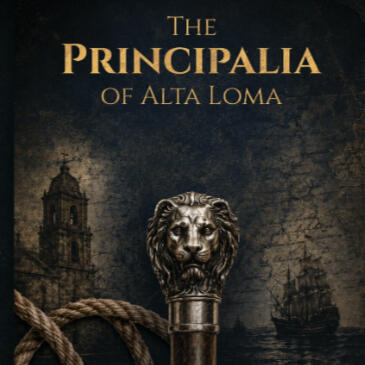
The Principalia of Alta Loma
A historical visual novel in the works. Want to read sample chapter? Follow me on instagram for updates
Heritage Map - concept
Mapping historic places and their stories.
Character Creator and comic builder - draft
Arcade
Can You Survive Games - a trivia game where a person from the modern era who has a romanticized perception of history, finds himself in the past:
-- Spanish Colonial Era v.1
-- The Victorian Era - in the works
Lugo's Glide v.1 - a 60-second side-scrolling game set in a Philippine forest canopy. Help Lugo, a Philippine colugo, escape an eagle-owl while encountering wildlife found across the islands.
Vivian's Travel Advisory - Vivian, a Philippine frogmouth with a dry character, knows how hard you work and wants you to take that vacation. Tell her your situation and she'll recommend a place.
Productivity
Sweater maker - concept
Design a sweater.
It can be easy to romanticize the past from the comfort of the present. Survive the Empire is a simple game that asks what would happen if you actually had to live within it. Inspired by the world of The Principalia of Alta Loma, this trivia game lets you test the social realities of Spanish colonial Philippines
Sweater Maker Concept
In my mind, the character/comics builder concept is the direction this is going. Basically it's the same layering of texts and images. See it at work below.
Chapter 15
The Rope and the Leash
The summer of 1848 was nearing its end, and the sky over Alta Loma hung beneath a low wall of dark clouds shifting fast enough to catch the eye. The sun pressed thin behind them, leaving the town heavy and dim as Gabriel guided a carabao through the muddy streets.“Go on, Puti.”Puti moved steadily in front of bamboo poles fastened to a crossbeam across her shoulders while the low cart behind her dragged through the softened earth. Its wooden wheels sank deep into the mud, the railings creaking softly with each pull. Her hooves struck in a slow, wet rhythm. Each step pressed before pulling free with a plop. Indigo‑stained mud clung along her legs, streaking her white hide with specks of blue.Gabriel drew the rope slightly, and Puti pulled back a step, steadying her stance as she hauled the cart behind her. The load was uneven, with terracotta jars for indigo packed close, and between them, secured with more care than the rest, the English clock.Puti slowed at the corner and grew restless. Her ears lifted toward a sound ahead, and Gabriel felt her unease through the rope before he understood its cause. He reached into the cart for a fistful of hay, letting her chew while he steadied her.The friar came first. Fray Guerrero was at the head of the procession, once again seated in his elevated sedan chair, carried on the shoulders of four men. The gray light drew across his white hair, the lines on his face set in habitual displeasure. He looked straight ahead, the darkening morning seeming to gather around him first. His feet did not touch the mud.
Puti stirred again.Behind the friar rode Don Miguel Montemayor, Alta Loma’s gobernadorcillo, his silver lion-headed staff of office resting across the saddle. A length of rope threaded through a line of men by their necks, drawn tight enough to keep them moving together along the road.Puti shivered and pulled against the rope. Gabriel steadied her with a hand along her face, as his gaze lingered on the vara de mando resting on Don Miguel’s saddle. A breath caught in his throat.The corner opened to the commerce of the Pariancillo, where narrow houses of wood and stone pressed close under hanging parasols and lengths of cloth strung between the eaves. Indigo-stained ropes crossed overhead, sagging beneath drying bundles. The shade broke unevenly across the walls and baskets, marking everything with patches of blue while the scent of vegetation lingered in the air.Activity returned slowly as the line disappeared deeper into the district. Boards were lifted, baskets set down, jars of dye and vinegar unwrapped from their cloth covers. Tomasio raised the shutters of his small coffee stall set below the awning, the scent of roasted beans and burnt sugar drifting into the air.“They came for the polo this morning,” Tomasio said, his eyes fixed on the retreating line, a frown pulling at his mouth. “They took my eldest to work on the dikes. Forty days, they said.”“But your debts were cleared in the last collection,” Gabriel said.“Indios who cannot pay the falla go as well,” Tomasio sighed.“Eduardo is strong enough to carry stone.”
“A revenge,” Gabriel said. “Because I settled your sanctorum.”“We got to keep the house at least,” Tomasio said.
Gabriel nodded. “I’ll see what I can do with your son.”He continued along the shaded path until the street narrowed into a small clearing. A low tea house sat under a sloping shed, thin steam drifting from within carrying the scent of jasmine and ginger.Puti stopped. The cart settled with a soft groan as the wheels found their rest. Gabriel steadied the beam, brushing a hand along Puti’s flank before turning toward the shade.“Señor Gabriel”Don Pedro de Peralta was already there.“Capitán Pasado,” Gabriel greeted.Don Pedro stood with one foot slightly favored, his vara de mando of a worn silver crocodile head pressed lightly into the mud. A small parcel wrapped in brown paper hung from his other hand, tied with twine. He regarded the cart with an expression that hovered between amusement and mild disbelief.“Is this the blasphemous contraption I hear so much about?” he said, tapping the clock’s polished case with the crocodile’s snout. “Does it bite?”Gabriel bowed his head slightly. “It… keeps time, Don Pedro.”
“Ah,” Don Pedro said, studying the cart. “A dangerous habit in Alta Loma.”Gabriel allowed a small smile. “It’s only a clock, Señor.”“Nothing is only anything,” Don Pedro said. “Not here.”He leaned his weight onto the vara. The wrapped parcel in his hand shifted, and Gabriel caught the faint scent of something medicinal.“You’ve been to the apothecary,” Gabriel said.Don Pedro lifted the parcel.“Laudanum. Medicine for the joints,” he said lightly. “And for the ghosts.”
Don Pedro tapped the clock again. “But you—Trade Comisionado—you prefer to stay awake. You brought a clock to show them the future?”“It’s inevitable,” Gabriel said. “Time moves forward whether the campana tolls or not.”“And you, running for the cabecería,” he said, his eyes squinting. “Is that also inevitable?”Gabriel straightened.“I haven’t—”
“You have,” Don Pedro said, giving the vara a small wave as he walked around the cart. “Because you’re not the first to come to Alta Loma offering progress that was only ever a more efficient rope.”Gabriel’s jaw tightened. “That—I—”“But do you know what a cabeza truly is?” Don Pedro said.“A man who collects Spain’s debts from his own people,” he said. “Tributo, polo, sanctorum, bandala—the names change, the rope stays the same. And the Principalia is the first one tied to its neck.”He tapped the crocodile head against the cart frame, the silver catching a thin line of light.“You think you will change the system,” Don Pedro said, his hand resting on Puti’s back. “But the system is very good at changing the men who serve it. If you become cabeza, you will spend your days enforcing what Spain demands. You will ring the same bell you hope to silence.”Gabriel’s gaze lowered. “I only want the town to see that it has a choice.”Don Pedro heaved a heavy sigh, smiled, nodded, and adjusted his grip on the vara. “Now then. I came to buy something for my joints. And Bathala has given me a ride home.”Gabriel nodded. “Of course, Don Pedro. I can take you.”“But first, you have business inside,” Don Pedro said, glancing toward the tea house. “The man in the tunic has been looking to pick your pocket since you arrived.”He walked to the back of the cart, his steps slow but steady. He lifted himself onto the wooden edge, settling himself carefully. The crocodile head rested against the cart frame.“Blasphemous contraption,” he murmured, amused. “Let’s see what you do.”Gabriel disappeared into the tea house.The room held a low, steady ceiling lined with beams of mahogany. Steam drifted from a clay pot set over coals, the smoke settling into the rafters. A few men sat along the benches, talking about the polo, their cups held close as though guarding the warmth.Lin sat near the back, watching Gabriel from the corner of his eye as he approached.“You must be Señor Gabriel,” Lin said. “Tell me, why does the friar come to the Pariancillo when my people do not pay tithes to his god, and why does the Principalia take the land of the indios who tend it?”
“I did not come for politics, Señor,” Gabriel said. “My office received information about indigo vats for sale.”Lin unfolded a sheet of paper—creased, the ink thinned where fingers had pressed too often—and held it out between two fingers.“Someone left this behind,” Lin said.“Who?” Gabriel said.Lin sipped from his cup, avoiding an answer.Gabriel took the paper and sat across from Lin.
The names were written in a narrow column. A few names he recognized—men who had sold him vats in the last week, men who had spoken softly when they handed them over, men who had not met his eyes.At the bottom, a single note ran across the page, the letters cramped and hurried:Insolvent. Lands to be reassigned.Lin took the paper back abruptly. “Fifty pesos before I leave, Señor.”Gabriel reached for his purse slowly as the sounds of the Pariancillo gathered around him. Voices rose around the walls, boards shifted, wet cloth slapped against bamboo, jars clattered harder than before. A vendor shouted the price of vinegar. Another answered with dye. A dog barked. A carabao groaned. The noise gathered in his chest, the names on the list soon to be crossed out from the fields of their ancestors.A faint ticking reached him from outside, threading through the din. The English clock in the cart kept its own steady measure, the pendulum marking seconds with an indifference that pressed upward along his spine. Each beat felt deliberate, as though time itself were drawing closer around him with every swing.Heat rose through Gabriel’s camisa. The reassignment orders waited between Lin’s fingers.A pressure gathered at his throat, slow and deliberate, until he could feel his pulse beating hard beneath his collar. He tugged at it, loosening the fabric from his neck, but the tightness remained.He placed the silver on the table, took the paper from Lin, and stood.“They are expecting you,” Lin said, his voice catching Gabriel at the door. “We had sent word.”